
Judges silent after feds attack civilians at courthouse, a lawyer wants to know why
"We have to keep being outraged by it,” Cari Brunkow said. "Otherwise violence by law enforcement becomes a risk you take if you choose to exercise your rights to speech and assembly."
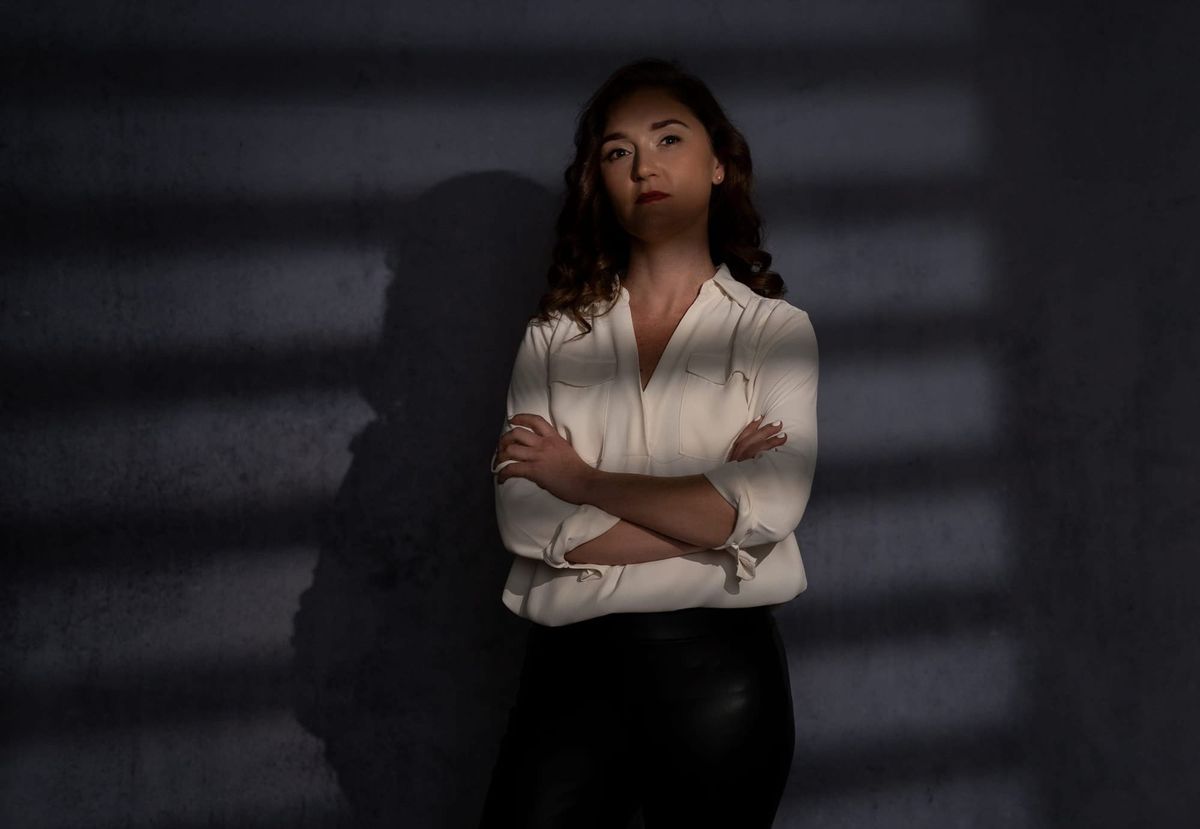
SAINT PAUL — Cari Brunkow, a Twin Cities based attorney, thought she was going to a courthouse on June 16 to observe several court hearings for Minnesota residents criminally charged together for a conspiracy to stop immigration enforcement in the Twin Cities.
The hearings, like the thousands of court hearings Brunkow has witnessed during her decade-long legal career, should have been formulaic. Defendants argue bond. Prosecutors usually argue against. A judge decides. Someone gets their freedom. Or they don’t.
Instead, Brunkow found herself providing medical care to a woman after federal agents from the U.S. Marshals Service wildly attacked and pepper-sprayed peaceful protesters who had gathered at the Warren E. Burger Federal Courthouse in St. Paul.
The protest was intended to be a show of support for those charged by President Donald Trump’s Department of Justice and a chance for the public to view the proceedings.
The event has troubled Minnesota's legal professionals. So much so that Brunkow sent a letter Monday to several federal judges in leadership positions to ask them why the judiciary has said nothing in the face of naked aggression.
“What has been almost as painful as that afternoon itself has been the silence that has followed,” Brunkow wrote to the Minnesota District Chief Judge Patrick Schiltz, outgoing Minnesota Federal Bar Association President Judge Elsa Bullard and incoming Minnesota Federal Bar Association President John Tunheim. Both FBA presidents are current federal judges in the state.
Brunkow said she was stunned that day. She knows several U.S. Marshals. She did not imagine the federal government would attack people without warning in front of a federal courthouse.
The protest of about a hundred people was not loud or raucous, Brunkow told Misfits Media. There was chanting, but nothing that could be reasonably perceived as a threat against those inside the courthouse.
“It’s not like I walked up (to the protest) and I saw anything that gave me pause as a person,” she said. “I felt 100% safe.”
Brunkow’s recollection of the events that transpired after her arrival, which is corroborated by video evidence and witness testimony, present a peaceful but disruptive crowd of people holding the entrance door to the courthouse open.
The crowd was asking for a viewing room to be open so that people could see the public hearings taking place.
She would have walked in, Brunkow said, but she was warned that federal agents were putting on gas masks.
“I honestly thought they were putting on tactical gear to be intimidating about the door,” she said. “ I thought that was the response, so I was a little bit rolling my eyes at the whole thing."
But the actual response to the public attempting to exercise Constitutionally protected rights was the same one federal law enforcement used during Operation Metro Surge.
Violence.
Brunkow and her law clerk watched armed federal agents, adorned in body armor and gas masks over their civilians clothes, gather by the door, throw explosive devices at the crowd and then pepper-spray anyone everyone in the area.
The chemical agent’s orange mist, recognizable by most Twin Cities residents at this point, hit both targeted individuals and people simply standing near the door.
@reportermark Federal agents pepper sprayed protesters at the Warren Burger Federal Courthouse in St. Paul, Minn. People had gathered to support the 15 people indicted by the Trump regime for resisting its ethnic cleansing program. #minnesota #pepperspray #LIVEIncentiveProgram #JustGoLIVE #PaidPartnership
♬ original sound - Mark Wasson
Yann Chen, a local Twins Cities activist, was one of the civilians thrown to the ground by federal paramilitary forces that day. After the initial assault where Chen was hit with pepper spray while chanting into a microphone, she held her arm up to her face as she attempted to move toward civilians lying on the ground.
"A U.S. Marshal near the door grabbed my left arm that I had held up, he pulled my arm down and sprayed me directly in the face,” Chen told Misfits Media. "At this point, another U.S. Marshal walked up behind me, grabbed my shoulders, and threw me sideways and backwards to the ground.
She continued chanting in support even though she was blinded by the assault.
“This experience is no different than when I fought bullies in high school,” Chen said. “The only difference being that, instead of everyone being equally culpable under a public school model, the U.S. Marshals will never be held accountable."
The chaos federal agents caused was most notably marked the orange solution coating nearby walls and windows and by a chemical munitions container hap-hazardously left on the ground by the federal goon squad sent to attack peaceful protesters.
After the assault, Brunkow said she saw a college-aged woman in a sundress who had been covered in the chemical irritant. Brunkow began helping the woman flush out her eyes with water.
The woman told her she was glad she did not wear sunscreen that day. If she had, the pepper-spray would have bonded to her skin better, causing her much more pain.

This is something often repeated in American history with people not intending to find a fight who suddenly find themselves being harmed by armed state actors.
After helping render medical aid, Brunkow took a stance in front of the protest, right in front of the windows that line the entrance. She wanted to make sure court security saw her as part of the protest now.
She wanted to show them that grieving people are not “some sort of problem that you can just launch chemical agents at to close a door,” she said.
In her letter, Brunkow acknowledges the importance of judicial restraint and that she does not expect the judiciary to comment on criminal cases or to weigh in on political disputes, but she says the fact remains that there was an attack by the federal government on courthouse grounds.
“Many of us have devoted years to building public confidence in this institution. Many of us spent countless volunteer hours inviting our communities into this courthouse because we believe it represents the bedrock of the principles this country is committed to,” she wrote. “To have personally experienced that afternoon, and then to hear nothing from the leaders of our legal community — not even an acknowledgment that it happened — has been deeply disappointing."
The lack of response from legal leadership in Minnesota may have something to do with how lawyers are trained, according to Brunkow.
“You’re told, even as a law student, that if you run your mouth, you might not get a job,” she said. “If you want to be part of this profession, if you want to be part of this industry, you have to be very very careful about stances that you take and ways that you take them."
Brunkow started her own law firm on January 1, six days before Renee Good was killed by ICE agent Jonathan Ross. Since then, she has worked to be a pipeline in the community in order to connect people to resources to fight an increasingly angry and vindictive federal government.
"We have to keep being outraged by it,” Brunkow said. "Otherwise violence by law enforcement becomes a risk you take if you choose to exercise your rights to speech and assembly."
Something the country has seen in front of privately run immigration detention centers on an almost daily basis, Brunkow added.
She’s not alone in her disgust with how people were treated by federal law enforcement that day.
Anna Hall, a staff attorney for the Legal Rights Center and a member of the National Lawyer’s Guild, was present at a separate, earlier protest at the Minneapolis federal courthouse.
She was asked by a protester if they had a legal right to be here. Hall said it was a public space, which the public is allowed to be in.
“I pretty confidently told them ‘We’re safe to do this here’, and then to turn around four hours later and see that, in fact, is apparently not true here in the Twin Cities,” she told Misfits Media.
“That citizens in this state can’t protest safely outside of a courthouse was really distressing and disheartening,” she added. “It made me really angry."
Hall is especially concerned with law enforcement’s use of chemical irritants against civilians.
“There’s a willingness (from law enforcement) to deploy things like Mace or pepper-spray with very little consideration for the long-term effects on people,” she said.
“The kind of activity (protesters) were engaged in simply did not pose the kind of risk that makes that necessary,” she added.
Hall also voiced support related to Brunkow’s call for judicial leaders in Minnesota to respond to what happened to civilians on courthouse grounds that day.
“(Judges are) supposed to be serving Minnesota, so I think it would be appropriate to hear from members of the judiciary that what happened to civilians on judiciary grounds was not acceptable, and that courthouses are in fact a safe place for members of our community to gather,” she said. “Whether that's to support people in a public court proceeding or to voice dissent outside the courthouse doors. There's certainly a role for judges to play in ensuring that community members know that courthouses are safe and open."
Federal legal leadership in Minnesota has yet to comment publicly about the events that day or respond to Brunkow’s letter.


Comments ()